The Arab Network of Learning Cities Scientific Chairs of the UNESCO Regional Center for Quality and Excellence in Education

The center also operates through its extensive regional educational networks, including:

🌍 The Arab Network of Learning Cities

A platform dedicated to monitoring impactful community initiatives and best practices.

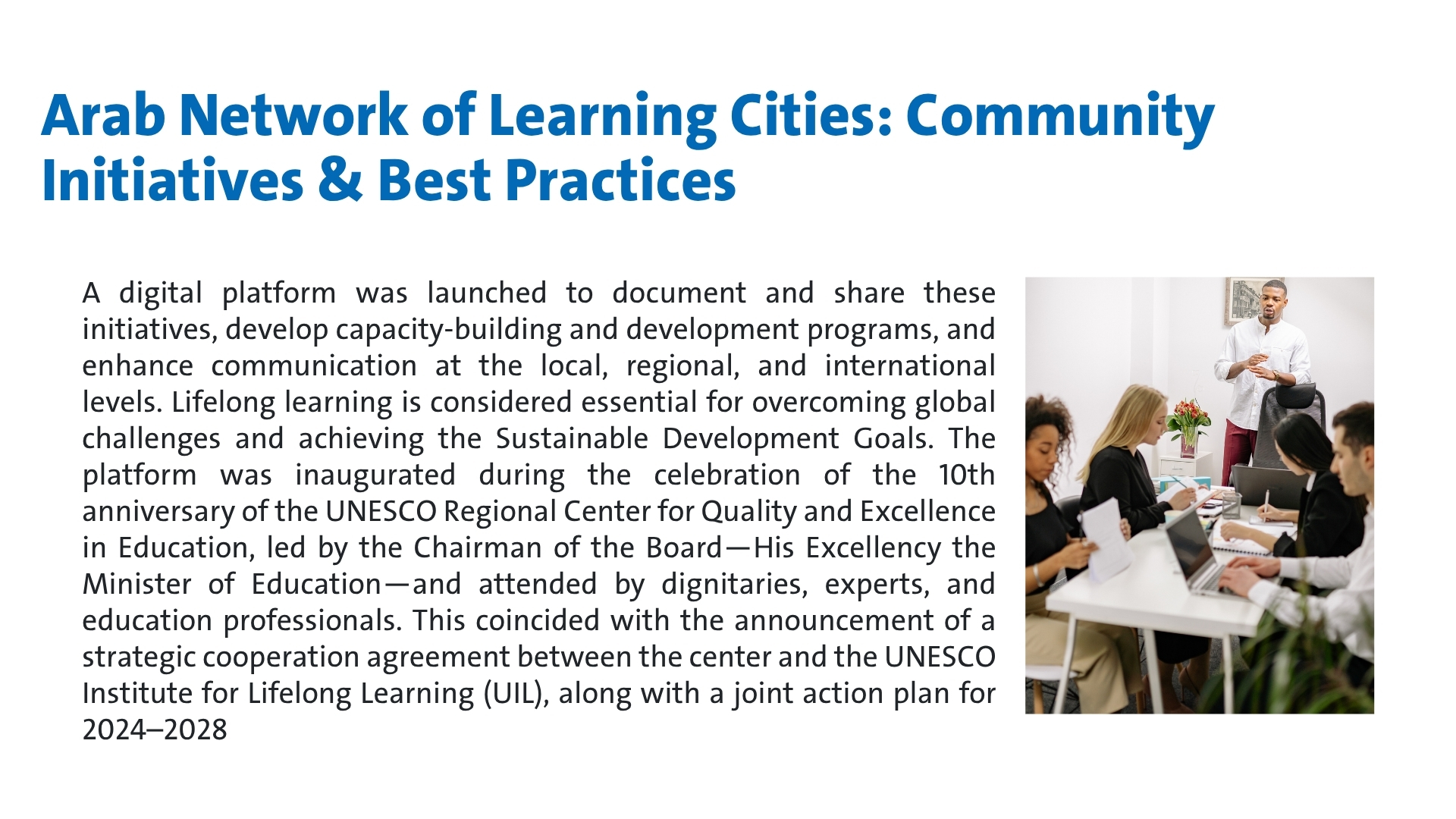
A digital platform was launched to document and share these initiatives, develop capacity-building and development programs, and enhance communication at the local, regional, and international levels. Lifelong learning is considered essential for overcoming global challenges and achieving the Sustainable Development Goals. The platform was inaugurated during the celebration of the 10th anniversary of the UNESCO Regional Center for Quality and Excellence in Education, led by the Chairman of the Board—His Excellency the Minister of Education—and attended by dignitaries, experts, and education professionals. This coincided with the announcement of a strategic cooperation agreement between the center and the UNESCO Institute for Lifelong Learning (UIL), along with a joint action plan for 2024–2028 aimed at:

  • Highlighting the Arab Network of Learning Cities and activating its role as a hub with standards and indicators for identifying and exchanging best practices and measuring effective sustainability
  • Developing collaborative action plans at national, regional, and international levels to support Arab cities in joining UNESCO’s Global Network of Learning Cities
  • Supporting non-member Arab cities to become part of the global network
  • Building capacity and sharing best practices to help Arab cities meet UNESCO’s criteria for recognition as Learning Cities and for the UNESCO Global Award for Best Learning City

For more information, visit the UNESCO Lifelong Learning Institute page.


🎓 Scientific Chairs of the UNESCO Regional Center for Quality and Excellence in Education

The center has adopted the concept of scientific chairs to mobilize the expertise of higher education and research institutions in addressing the complex and interconnected challenges of today’s world. These chairs aim to strengthen an integrated system of research, training, and activities across diverse fields by building university networks and promoting cross-border academic collaboration. The initiative enhances the link between research policies and practices at national, regional, and global levels. Through its integrated approach—combining research and community engagement—the center fosters interdisciplinary knowledge creation and serves as a global observatory and laboratory for ideas, especially in light of emerging technological, social, political, and environmental disruptions.

The chairs contribute to improving the quality and excellence of education in Arab countries through mechanisms tailored to the region’s educational realities, opportunities, and challenges. They support the production of research outputs by leveraging the capacities of universities and scientific institutions to conduct studies and organize academic events, and disseminate findings according to global best practices. The initiative also strengthens partnerships with supporting institutions and operates under institutional arrangements that safeguard the rights of funders and beneficiaries, including the center, universities, and other stakeholders.

This global network aims to include more than 150 higher education and research institutions worldwide by 2030. Established chairs include:

  • Sustainability Research Chair at King Khalid University under the auspices of the UNESCO Regional Center
  • Chair at Imam Abdulrahman Bin Faisal University
  • Talent and Creativity Chair at Mawhiba Foundation
  • Emergency Education Chair at King Salman Humanitarian Aid and Relief Center under the UNESCO Regional Center


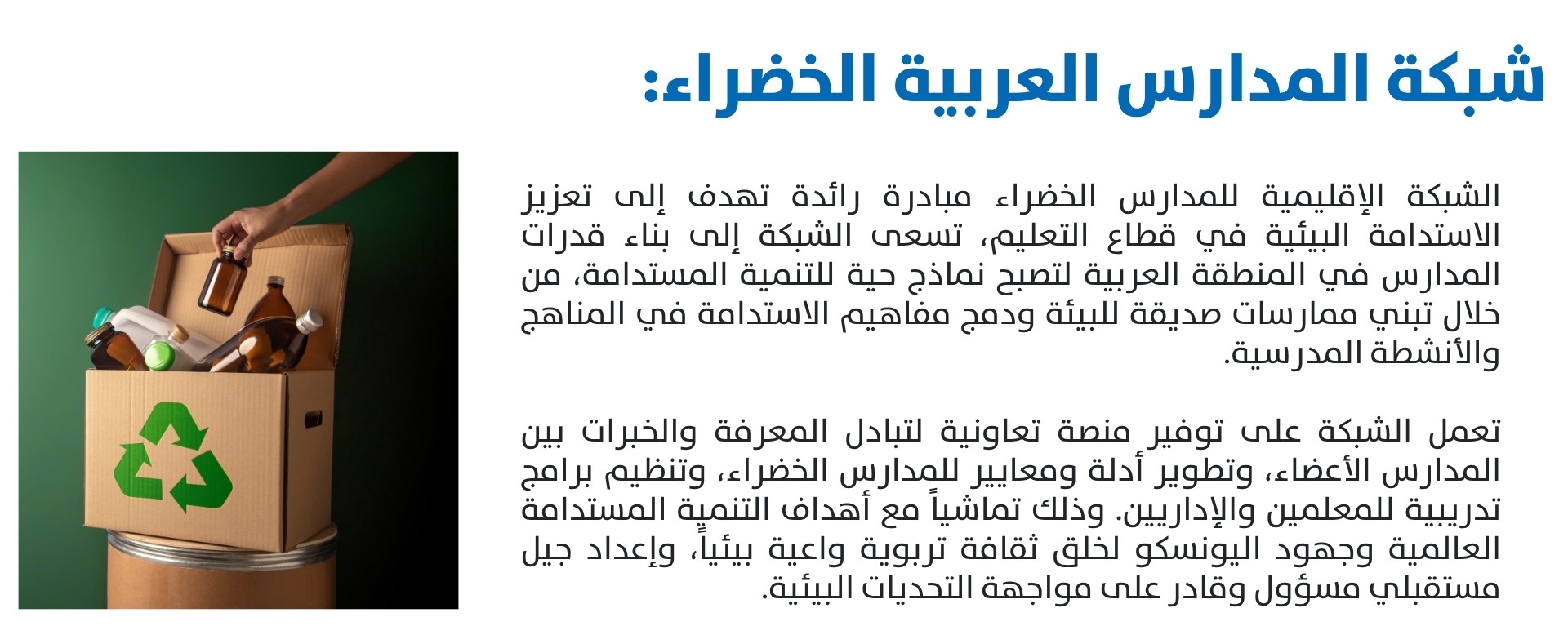
🌱 Arab Green Schools Network

A network that brings together Arab schools meeting the standards and indicators of the Arab Green School Model. It currently includes schools from 22 countries.